2026-08-21 · Mike Brennan
Preparing Electrical Panels For Summer Storms In Clermont
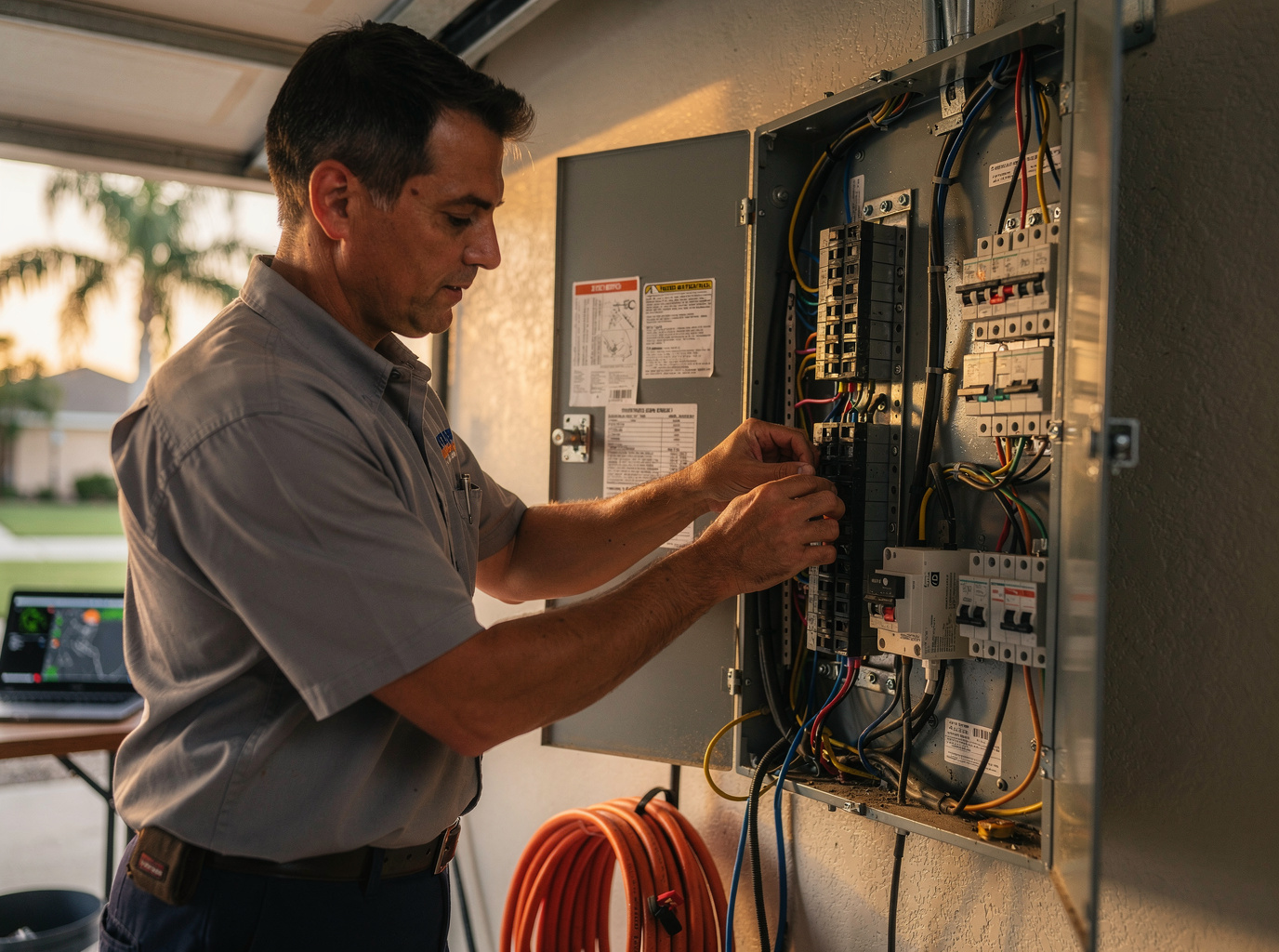
In Clermont's humid subtropical climate, preparing your electrical panel for summer storms starts with installing whole-house surge protection rated for at least 40,000 amps and scheduling a full inspection 4-6 weeks before June. Older panels in neighborhoods like the Clermont Historic District often lack modern grounding, leaving circuits vulnerable to lightning strikes common near Lake Louisa State Park. Homeowners in Downtown Clermont and Lake Highlands face added risks from heavy rain that can seep into outdoor enclosures on homes built before 1980.
Assessing Panel Condition in Local Housing Stock
Many homes around the Citrus Tower and in the Clermont Historic District still rely on 100-amp or 150-amp panels installed decades ago. These older units frequently show signs of corrosion from Lake County's high humidity and occasional flooding near waterfront areas. Walk the exterior first and check for rust on the main disconnect, then open the cover to look for burn marks on breakers or loose neutrals. Document any double-tapped circuits or aluminum wiring, both common in pre-1970 Lake County construction, before storm season arrives.
Adding Surge Protection and Grounding Upgrades
Whole-house surge devices mount directly at the panel and divert spikes from lightning or utility switching before they reach appliances. Pair this with a driven ground rod if the existing system measures above 25 ohms, a frequent finding in sandy Lake County soil. Homes near Clermont Waterfront Park benefit from additional bonding of metal siding and pool equipment to reduce side-flash risks during storms. These steps reduce damage far more effectively than plug-in strips alone when summer cells roll through from the west.
Inspecting Breakers and Connections Before Peak Season
Test each breaker by flipping it off and on to confirm it still seats properly, then tighten all terminal screws to manufacturer torque specs. In Lake Highlands, where many homes run heavy air conditioning loads, look for warm breakers or discolored wires that signal overloads. Replace any breaker showing signs of failure rather than waiting for it to trip during a storm. Circuit Breaker Replacement becomes necessary once panels exceed 20 years without prior service.
Handling Moisture and Corrosion Risks
Summer humidity drives condensation inside outdoor panels, especially on south-facing walls that receive direct afternoon sun. Apply dielectric grease to terminals and ensure weep holes remain clear so water can exit. Properties in Downtown Clermont with slab foundations sometimes see moisture wick up through conduit; adding drip loops and sealing entries prevents tracking that leads to arcing. Regular checks every spring catch these issues before they compound during July and August thunderstorms.
Knowing When to Schedule Professional Service
If the panel shows more than two double-tapped breakers or the main lugs appear pitted, contact an electrician rather than attempting repairs yourself. Electrical Panel Upgrade often makes sense for homes planning EV chargers or whole-house generators common in growing Lake County areas. Residents near Winter Garden or Leesburg can reference similar soil and storm patterns when comparing experiences. The business maintains hours Monday through Friday 8am–6pm and Saturday 9am–2pm for these inspections.
Continuing Education on Related Electrical Concerns
Frequent AC cycling during hot months can mask early panel stress that only appears under storm loads. Review How To Spot Overloaded Circuits From Heavy AC Use In Florida for additional diagnostics that complement storm prep. Older Lake County homes also benefit from checking GFCI protection near water sources before storms arrive, as detailed in related guidance for the region.