2026-08-21 · Mike Brennan
How To Spot Overloaded Circuits From Heavy AC Use In Florida
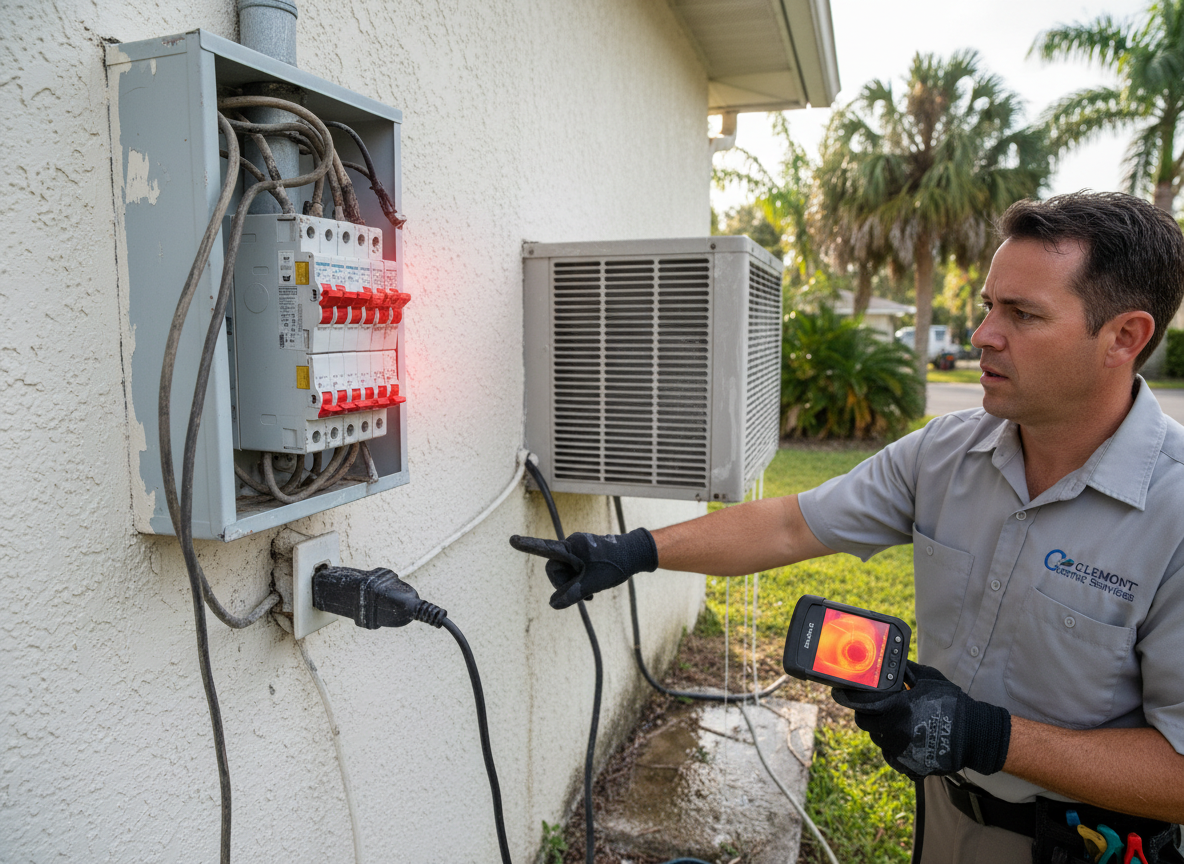
In Clermont's hot summers, overloaded circuits from continuous AC use most often appear as breakers that trip two or three times a week when the outdoor unit starts, lights that dim noticeably on the same circuit, or outlets that feel warm to the touch after the AC has run for several hours.
Common Warning Signs During Peak AC Season
Homeowners in Downtown Clermont and Lake Highlands notice these patterns first because single-story ranch homes from the 1970s and 1980s often share one 15-amp circuit between the AC blower and several rooms. Flickering or buzzing from the panel when the compressor kicks in signals the circuit is exceeding its rating. Warm or discolored outlets near the thermostat or in bedrooms point to heat buildup in the wiring. A persistent burning smell near the electrical panel after the AC cycles off is another clear indicator that the load has exceeded safe limits. These signs appear more frequently after June when daytime highs push AC units to run 10–14 hours daily.
How Humid Subtropical Weather Increases Circuit Stress
Lake County's climate keeps humidity above 70 percent from May through September, forcing AC systems to work harder and longer than in drier regions. Homes near Clermont Waterfront Park and Lake Louisa State Park face additional moisture that can corrode connections inside outdoor disconnects and indoor panels. When an older 100-amp service tries to supply a 4-ton or 5-ton unit plus indoor air handlers, the main breaker or branch circuits reach capacity quickly. Nearby Leesburg and Winter Garden report the same pattern because their housing stock mirrors Clermont's mix of 1960s–1980s construction with original wiring still in place.
Older Homes in the Clermont Historic District
Properties in the Clermont Historic District and surrounding streets often retain original fuse boxes or early breaker panels that were never sized for modern AC loads. Aluminum branch wiring common in homes built before 1975 expands and contracts with each AC cycle, loosening connections at outlets and switches. Residents notice the difference when a single window unit on a 20-amp circuit shares power with a refrigerator and several lamps. These homes benefit from targeted inspection of the panel and individual circuits rather than whole-house replacement unless multiple signs appear together.
Checking Your Panel and Circuits Safely
Turn off the AC at the thermostat and open the panel door during daylight hours. Look for breakers that feel hot or show scorch marks around the toggle. Count how many 15- and 20-amp breakers feed bedrooms and living areas versus the number of high-draw appliances on those same circuits. Note any double-tapped breakers or wires that share a single lug. If the main breaker is rated 100 amps or less and the home has central AC, the service is likely undersized for current usage patterns. These checks take under 15 minutes and reveal whether the issue is one overloaded branch or the entire service.
Next Steps When Overloads Are Confirmed
A circuit breaker replacement can resolve repeated trips on a single branch when the wiring itself remains sound. For homes where the main service is undersized, an electrical panel upgrade brings capacity to 200 amps and adds dedicated circuits for the AC. Review the related guide on preparing electrical panels for summer storms in Clermont to understand how added load interacts with storm-related surges. Schedule service between 8am and 6pm Monday through Friday or 9am to 2pm on Saturday when an electrician can test under load and confirm the exact circuits affected.